
Things to Do in Laos in June
June weather, activities, events & insider tips
Low Season · Budget Friendly
June Weather in Laos
Temperature, rainfall and humidity at a glance
89°F (32°C)
High Temp
77°F (25°C)
Low Temp
10.4 inches (264 mm)
Rainfall
70%
Humidity
⚠ Afternoon lightning on Bolaven plateau - seek shelter, not high ridge viewpoints
Is June Right for You?
Weigh the advantages and considerations before booking
Advantages
- + Waterfalls at absolute peak power. Kuang Si Falls outside Luang Prabang, the tiered turquoise cascade that appears on every Laos postcard, transforms from a photogenic trickle into a thundering curtain of white water in June. Tad Sae, Tad Fane on the Bolaven Plateau, Tad Yuang: they all swell to their most dramatic. The mist off these falls drops the temperature 5°C (9°F) and soaks you from 15 m (50 ft) away. You will not see them like this in dry season.
- + Rock-bottom prices and near-empty guesthouses. June is the quietest month in Laos, tourist numbers drop to a fraction of the November-February high season. Luang Prabang's UNESCO-listed old town, which can feel overrun by tour groups in January, belongs mostly to monks and residents in June. You'll likely have Pak Ou Caves to yourself. Accommodation rates tend to fall significantly from peak pricing, and you can often negotiate even further on the spot.
- + The landscape turns almost impossibly green. Dry-season Laos is brown and hazy from agricultural burning. June Laos is another country entirely, the karst mountains around Vang Vieng look like they've been painted in ten shades of emerald, rice paddies fill with water and turn mirror-flat, and the air clears after each rain to reveal views you simply cannot see in March. Photographers know this. The light after a late-afternoon storm, with low sun cutting through retreating clouds over wet limestone, is extraordinary.
- + Rice planting season opens up a side of rural Laos most visitors never see. Farmers across the country wade into flooded paddies in June to transplant seedlings by hand, a communal, backbreaking, often celebratory process that has shaped Lao life for centuries. Villages along the roads between Luang Prabang and Nong Khiaw, or on the Bolaven Plateau, are visibly alive with this work. Some community-based tourism programs in the Luang Namtha area let travelers join the planting. It's muddy, exhausting, and one of the most memorable things you can do in Laos.
Considerations
- − Rain will reshape your days whether you like it or not. This is not the light-drizzle version of monsoon, June storms in Laos arrive fast, hit hard, and dump 30-50 mm (1.2-2 inches) in a single afternoon. Skies tend to open between 2 PM and 5 PM most days, sometimes with enough force to turn unpaved roads into mud rivers within minutes. Morning activities work. Afternoon plans need flexibility. If you require a rigid itinerary, June will frustrate you.
- − Unpaved roads in remote areas become impassable. The route from Luang Namtha to Phongsali, some of the most spectacular scenery in northern Laos, turns into a rutted mud track that can add hours to journey times or close entirely after sustained rain. The road to Nong Khiaw has improved but still floods in sections. If your trip depends on overland travel through the northern highlands, check road conditions daily and build in buffer days. Domestic flights on Lao Airlines between Vientiane and Luang Prabang are the reliable alternative.
- − Some river activities become unsafe. The Mekong and its tributaries rise fast in June, the Nam Song in Vang Vieng, where tubing became famous, runs brown and swollen with a current that is materially more dangerous than the lazy float of dry season. Responsible operators will cancel or modify trips. This is correct. If river tubing in calm water is your primary reason for visiting Vang Vieng, come in November or December instead.
Best Activities in June
Top things to do during your visit
Kuang Si Falls and Northern Waterfall Trekking
June turns Kuang Si from a tourist checkbox into something that stops you in your tracks. The main cascade, which drops 60 m (197 ft) through limestone terraces, runs at roughly triple its dry-season volume, the roar is audible from the parking area 400 m (0.25 miles) away, and the mist plume reaches the viewing platforms. The turquoise pools below still hold their color in early June before peak sediment, though they shift toward jade green as the month progresses. The trail to the top of the falls, a steep 20-minute scramble up the left side, gets slippery but remains passable with proper footwear. You'll likely share the upper viewpoint with nobody. On the Bolaven Plateau in southern Laos, Tad Fane drops 120 m (394 ft) into a gorge between twin cliffs and hits peak flow in June, with enough force to generate its own weather system of mist and wind at the overlook. Combine it with Tad Yuang and the coffee plantations nearby for a full-day circuit.
Booking Tip: For Kuang Si, book a half-day trip through licensed operators at least a few days ahead, June means smaller group sizes but fewer departures. Look for operators who include the bear rescue centre visit and allow at least two hours at the falls. For the Bolaven Plateau, arrange a motorbike loop or hire a driver from Pakse for the day, see current guided options in the booking section below.
Luang Prabang Temple and Alms Ceremony Walks
The morning alms ceremony along Sakkaline Road starts before dawn, hundreds of saffron-robed monks from the town's 34 active temples walk barefoot in single file while residents kneel to place sticky rice and small offerings into their bowls. In June, you might be one of five or six observers instead of the fifty who crowd the route in high season, which transforms the experience from a tourist spectacle back into what it is: a living 600-year-old Buddhist tradition. The wet-season light at 5:30 AM, soft grey with occasional breaks of gold, is more atmospheric than the harsh dry-season sun. After the ceremony, the temple circuit through Wat Xieng Thong, Wat Mai, and Wat Visoun takes three to four hours on foot. The carved gold stenciling on Xieng Thong's chapel walls practically glows in the diffused monsoon light. June heat builds by mid-morning, so start early and punctuate with stops at the old-town coffee shops that roast Bolaven beans on site.
Booking Tip: Walking tours with local guides who can explain temple iconography and alms protocol are well worth arranging, book a day or two ahead through guesthouses or licensed cultural operators. Sunrise starts around 5:40 AM in June, so set your alarm for 5:00 AM. See current Luang Prabang cultural tours in the booking section below.
Vang Vieng Kayaking and Karst Exploration
The limestone karst towers around Vang Vieng are among the most dramatic landscapes in mainland Southeast Asia, sheer walls of grey-white rock rising 200-300 m (660-980 ft) from the valley floor, threaded with caves, draped in wet-season vegetation so green it almost hurts to look at. June kayaking on the Nam Song needs to be treated with respect, the river runs higher and faster than in dry season, with a brown-green color from upstream sediment. This is better for experienced kayakers: the current does the work, and the rain-swollen river reaches sections of cave systems that are dry and inaccessible the rest of the year. Tham Nam water cave, where you pull yourself through on a rope while headlamp light bounces off stalactites, is navigable in June though water levels vary week to week. The Blue Lagoons (there are several) lose their famous turquoise clarity but gain dramatic volume, the main lagoon's rope swing still operates. On dry mornings, the hot air balloon rides over the karst landscape offer views of flooded rice paddies reflecting the peaks like a vast broken mirror.
Booking Tip: Only go with operators who assess river conditions daily and will cancel if levels are unsafe, this is non-negotiable in June. Book kayak trips a day ahead in Vang Vieng town. For cave exploration, insist on proper headlamps and life jackets. Check current adventure tour options in the booking section below.
Vientiane Food and Market Circuit
Laos food is having a quiet international moment, and Vientiane is the best place to eat your way through the full range. The morning market at Talat Sao starts moving around 6 AM, when the heat is still manageable, vendors pile tables with khao piak sen (hand-rolled rice noodles in a cloudy, ginger-laced chicken broth that tastes like someone's grandmother spent all night on it), laap (minced meat pounded with roasted rice powder, fish sauce, lime, and enough chili to make your temples sweat), and sticky rice steamed in bamboo baskets that vendors crack open with a twist. The sticky rice here is not a side dish, it is the meal, torn into small balls and used to scoop everything else. In June, look for seasonal river weed (khai paen) dried and fried with sesame seeds, and fresh bamboo shoots that appear in curries and or lam (a thick Lao stew built from lemongrass, dill, and whatever the forest provided that morning). The Mekong riverfront between Fa Ngum Road and the night market fills up after the afternoon rain clears, usually by 6 PM, the post-storm breeze off the river drops temperatures noticeably, and the sunset views across to Thailand's Nong Khai province are at their most dramatic when storm clouds break apart into bands of copper and violet.
Booking Tip: Morning food walks through the market district are the best way to navigate Lao food for the first time, a guide who speaks Lao will get you access to dishes you would otherwise walk past. Book a day ahead through cultural tour operators. See current Vientiane food experiences in the booking section below.
Nong Khiaw Valley Trekking and Village Stays
Nong Khiaw sits on the Nam Ou river in a valley so tightly hemmed by limestone cliffs that the morning fog takes until 9 AM to burn off in June, the effect, looking upstream from the old bridge, is of peaks materializing out of white nothing, one ridge at a time. This small town roughly 145 km (90 miles) north of Luang Prabang is where serious trekkers base themselves for multi-day walks into Hmong and Khmu villages in the surrounding hills. June trails are slippery and leeches are a reality above 800 m (2,625 ft), but the forest is alive in ways dry season cannot match, waterfalls appear on cliff faces that are bare rock in February, the birdsong is constant, and the villages are deep into rice planting, which means communal meals, lao-lao rice whiskey shared after the day's work, and an energy that is entirely absent when fields are fallow. The 100 Waterfalls trek, which involves climbing a cascading limestone staircase of pools and falls using bamboo ladders, is at its most spectacular and most challenging in June. It is adventurous: not dangerous if you're with a competent guide, but physical, wet, and nothing like a maintained park trail.
Booking Tip: Arrange treks through guesthouses in Nong Khiaw at least two days ahead, June means fewer guides are available, and the best ones book up despite low tourist numbers. Multi-day treks with village homestays require advance coordination. Bring proper hiking sandals or trail shoes with grip and expect to be wet all day. See current northern Laos trekking options in the booking section below.
Bolaven Plateau Coffee Farm and Waterfall Loop
The Bolaven Plateau climbs to 1,300 m (4,265 ft) above the Mekong plain in southern Laos, and in June the air is markedly cooler than the lowlands, expect highs around 25-27°C (77-81°F) instead of the 32°C (90°F) steam bath of Vientiane. This is where Lao coffee comes from, and the arabica and robusta plantations that blanket the plateau's red-earth hillsides glow their lushest green in early monsoon season. The classic loop from Pakse, roughly 320 km (200 miles) on mostly paved roads, strings together Tad Fane, Tad Yuang, Tad Champi, and a dozen smaller waterfalls, all roaring at full volume. Coffee farms along the route pour tastings and walk you through the complete processing chain, from cherry to cup, in places where the air smells of wet earth and roasting beans and the views plunge off the plateau edge into hazy lowland valleys. The ethnic Laven, Alak, and Katu villages scattered across the plateau keep distinct weaving traditions and animist practices, the carved wooden totems outside village spirit houses look like nothing you'll see in lowland Lao culture. June rain on the plateau falls as steady drizzle rather than the violent downpours of the Mekong valley, making it far easier for motorbike riders to handle.
Booking Tip: The loop works best by motorbike over two to three days, with overnights in guesthouses at Tad Lo or Paksong. If you are not comfortable on a motorbike in wet conditions, hire a driver from Pakse, arrange at least two days ahead. Licensed operators offer guided loops with all stops planned. Check current Bolaven Plateau tours in the booking section below.
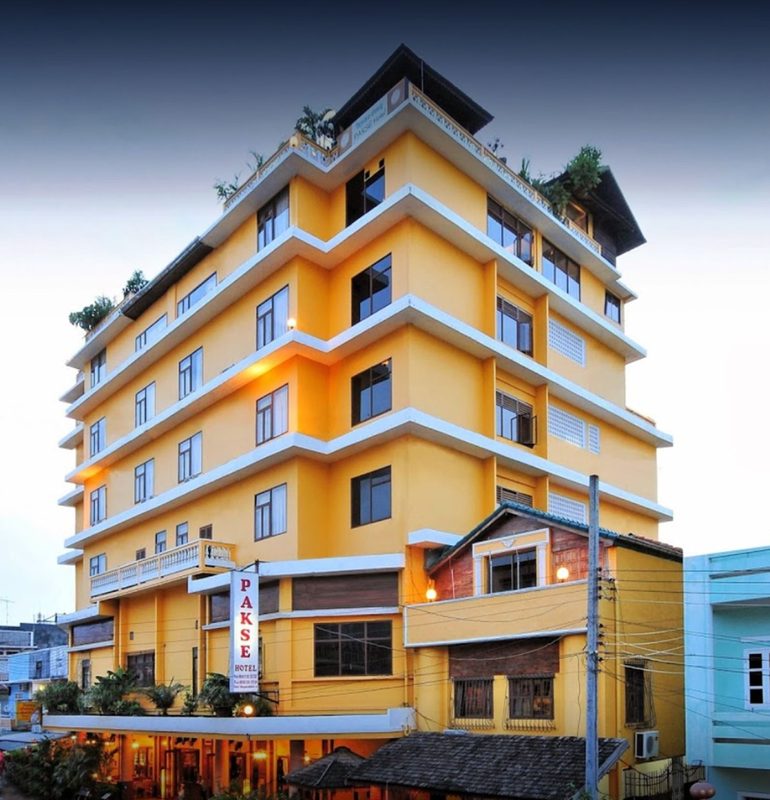
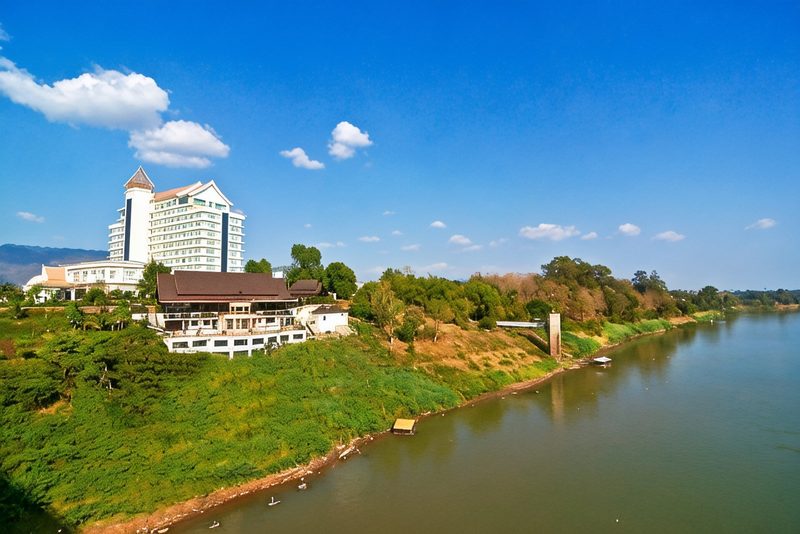
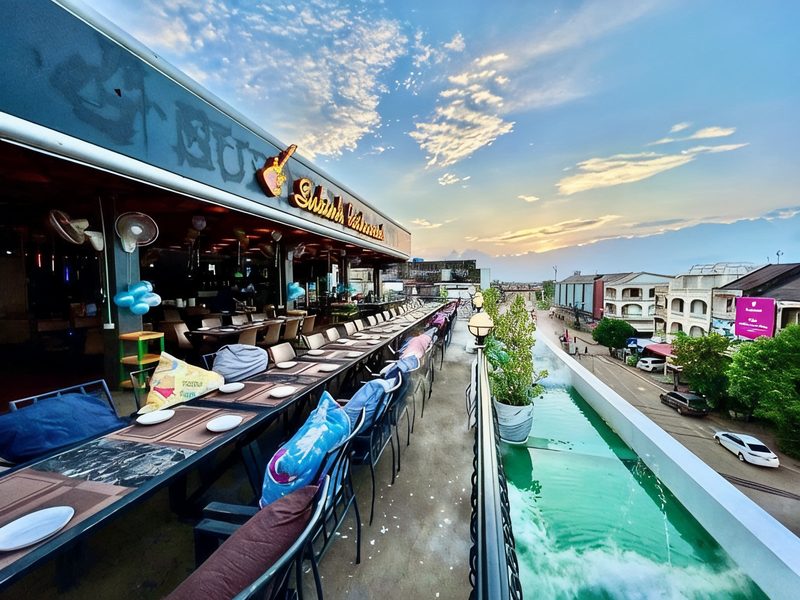
Where to Stay in Laos in June
Hand-picked hotels across price tiers for June travellers.
June Events & Festivals
What's happening during your visit
Late May to early June (varies by village and lunar calendar, confirm locally)
Boun Bang Fai (Rocket Festival)
Boun Bang Fai is a pre-Buddhist rain ceremony that Laos has folded into Theravada tradition, villages build enormous bamboo rockets packed with gunpowder and fire them into the sky to coax the rains from the heavens. The atmosphere is rowdy, soaked in lao-lao whiskey, and accompanied by elaborate parades featuring bawdy humor, cross-dressing, and dancing that would shock anyone expecting solemn Buddhist ritual. The rockets themselves range from arm-length firecrackers to 9 m (30 ft) monsters that shake the ground on launch. When one fails to ignite, and this happens regularly, the builder gets thrown into the nearest mud pit by the crowd, to general hilarity. The festival is strongest in Vientiane Province, around the towns south and east of the capital, and in parts of Luang Prabang Province. Villages choose their own dates based on the lunar calendar.
Throughout June (timing depends on when local rains establish)
Rice Planting Season Ceremonies (Boun Khao Phansa Preparations)
The onset of monsoon rains triggers rice planting across the Lao lowlands, and this is not a quiet agricultural chore, it is communal, ceremonial, and central to village life in a country where rice cultivation still employs the majority of the rural population. Villages in the Mekong floodplain and the valleys around Luang Prabang, Nong Khiaw, and the Bolaven Plateau hold small baci ceremonies to bless the paddies before transplanting begins. Families and neighbors work together knee-deep in flooded fields, passing seedlings down lines of planters in a rhythm that has not changed in centuries. The smell of wet clay and fresh green shoots, the sound of laughter and conversation carrying across flat water, the sight of conical straw hats dotting an endless green plain, this is Laos at its most essential. Several community-based tourism projects in Luang Namtha and Nong Khiaw districts invite visitors to participate. You will be slow, clumsy, and covered in mud. The families will find this hilarious and feed you afterward.
Packing Checklist
Bookmark this page — your progress is saved between visits
Need the full list with shopping links?
Climate-specific gear, brand recommendations, and what to leave at home.
View Laos Packing List →Essential Tips
Insider knowledge and common pitfalls to avoid
Insider Knowledge
June rewards the early riser. Between 6 AM and 11 AM the sky stays dry. Rain almost never arrives before noon. Schedule every temple, market, or viewpoint for this window, then surrender the afternoon to museums, hammocks, or watching storms sweep past your guesthouse veranda. Locals live by the same clock: markets roar at dawn, streets empty by 2 PM, and by 5 PM, when the rain stops and the air cools, the town breathes again.
June menus spotlight ingredients you will not taste any other month. Fresh bamboo shoots, dug at sunrise, sliced paper-thin, simmered in or lam with buffalo skin and padek, reach their sweetest. Mekong river weed (khai paen) is dried on bamboo screens, flash-fried with sesame, and sold in Luang Prabang for only a few days. Skip the laminated tourist menu and ask for what is in season. Say 'khoi yak gin aahaan tam ladu' and you will earn a grin and a better plate.
The Laos-China Railway from Vientiane to Luang Prabang clocks in at about two hours and keeps running when monsoon rains turn roads to soup. Opened in late 2021, the line has rewritten northern Laos logistics. Buy tickets a day or two ahead at the station, June still has open seats. Seventy-five tunnels and high bridges flash past the windows, giving brief, spectacular glimpses of the Mekong valley swollen and brown with monsoon water.
Is Laos safe in June? The blunt answer: yes, with conditions. Violent crime against tourists is almost unheard-of. The danger lies in infrastructure, flooded roads, landslides on northern passes, and river crossings that turn lethal as water rises. UXO left from American bombing between 1964-1973 still litters Xieng Khouang Province and sections of the Ho Chi Minh Trail in the south. Never leave marked trails in these zones, no matter how tempting the shortcut. Listen to local guides without argument.
Avoid These Mistakes
Drawing a tight overland loop through northern Laos? In June a four-hour dry-season drive can stretch to eight, or simply stop. The road from Luang Prabang to Phongsali is the worst culprit. Yet even upgraded Route 13 between Vientiane and Vang Vieng floods in spots. Insert buffer days between every leg. If you have ten days, program seven of action and three of weather slack. You will need them.
Writing off Laos because it is monsoon season is the classic mistake. Travelers who still come, and there are few, often call it their finest Southeast Asia chapter. Crowds vanish, the land turns emerald, and the country feels lived-in rather than stage-managed. Rain is real yet manageable if you shift your rhythm. You will wander alone through UNESCO temples, chase thundering waterfalls, and share long stretches of the Mekong with only river traffic.
Packing for beach weather in Laos is pointless, the country is landlocked. June calls for rain gear, grippy footwear, and layers for cool highland nights around Nong Khiaw or on the Bolaven Plateau where the mercury can dip to 20°C (68°F) after sunset. Arrive with nothing but shorts, singlets, and flip-flops and you will spend your first Luang Prabang afternoon paying tourist-shop mark-ups for emergency kit.
Ready to plan your trip to Laos?
Now that you've got the research covered, here's where to go next.
Book Experiences in Laos
Top-rated things to do in Laos this June


Explore More Activities in Laos
Didn't see anything interesting yet?
Browse Viator's full catalog of tours, day trips, food experiences, and private guides in Laos.
See All Laos Tours on Viator